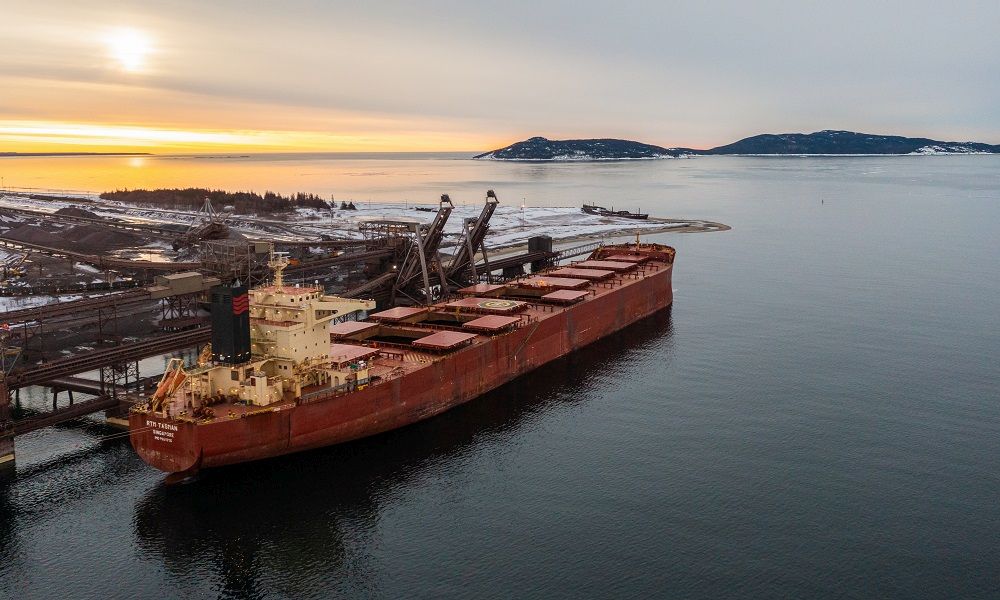
Rio Tinto has sold the last two vessels in its eight-ship owned newcastlemax fleet to Turkey’s Yasa Shipping, completing a disposal programme launched earlier this year, Splash 247 reported. The latest transaction covers the 2013-built RTM Drake and RTM Tasman, with neither the sale price nor delivery terms disclosed.
Yasa’s fleet records list the former RTM Drake as Yasa Drake, with a capacity of 205,437 dwt, and the former RTM Tasman as the 205,432 dwt Yasa Pioneer. Both ships were built by Hanjin Heavy Industries. Their addition means Yasa has taken ownership of five of the eight newcastlemaxes sold by the miner.
Splash 247 first reported the fleet changes in April, when Rio Tinto sold the 2012-built sister vessels RTM Cartier and RTM Zheng. Brokers then valued that pair at about $90m combined. They are now listed as Yasa Team and Yasa Unity. Yasa later acquired the 2013-built RTM Cabot, renamed Yasa Fortune. Those five purchases, together with the existing 207,805 dwt Yasa Dream, bring the Turkish company’s newcastlemax fleet to six. Its overall dry bulk fleet now comprises 43 vessels totalling roughly 3.56m dwt, according to its fleet list.
Another two vessels from Rio Tinto’s disposal programme, RTM Dampier and RTM Columbus, went to Swiss commodities trader Mercuria for around $88m earlier in the year, Splash 247 said. The ships have subsequently taken the names Adamello and Cristallo.
Shipping sources told Splash 247 in June that Rio Tinto had offered the entire eight-vessel series for sale as it substantially reduced directly owned tonnage. The programme was described as its first major bulker sell-off in about 14 years. Chartered vessels already dominate the miner’s freight arrangements: Rio Tinto’s 2025 figures showed 230 chartered ships transporting more than 300m tonnes of product annually.
The sales do not mark an exit from using newcastlemax vessels. In April, Rio Tinto agreed charters with Japan’s NS United Shipping for two methanol-ready, dual-fuel ships in that class, scheduled to join its transportation portfolio from 2028.