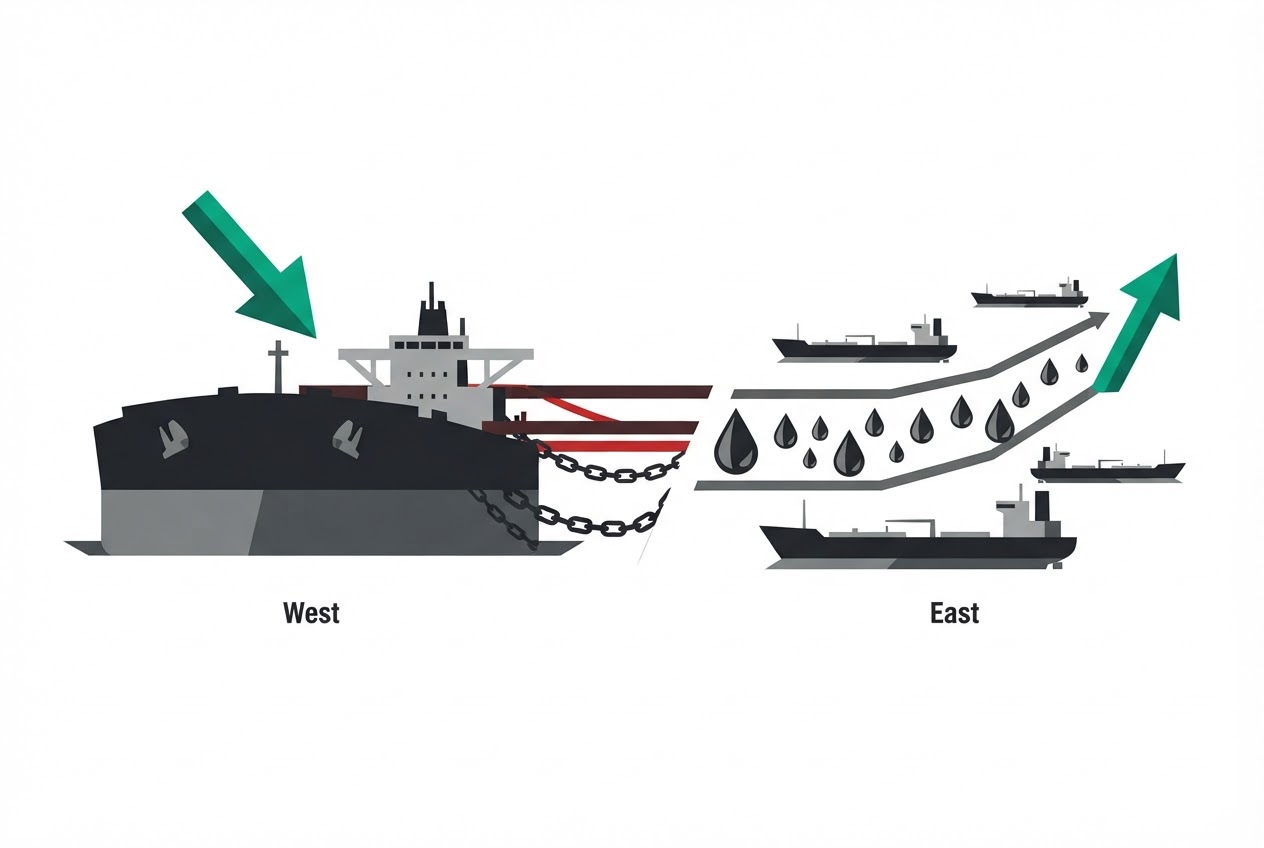
Elevated tanker freight costs are restricting Western naphtha shipments to Asia despite a wider East-West price spread, Hellenic Shipping News reported, citing Gibson. Mediterranean-to-Japan transport costs on LR2 tankers remain above the spread on a per-tonne basis, leaving the arbitrage technically closed. Cargoes nevertheless continue to move, but in reduced volumes and with greater reliance on smaller vessels.
Gibson put the October spread at an average of about $65 per tonne, with a range of $45-$120, compared with $20-$45 through much of 2025. In March, the differential had comfortably covered Mediterranean-to-Japan freight, supporting Western exports. Transport costs have since increased much faster. Although LR2 freight on that route has fallen by roughly a quarter from its mid-October high, the decline has not restored the economics of the trade.
The changing vessel mix reflects that pressure. LR2s carried just two of October’s 24 Western cargoes, against six in January, while MR cargoes increased from 10 to 21. The Mediterranean accounted for much of the shift, sending 15 MR cargoes to Asia in October compared with one in January; the US Gulf supplied two. Gibson linked limited LR2 availability to extensive switching into dirty trades since the war began. More LR2s are also positioned east of Suez, with most employed on westbound clean-product voyages from the Middle East and India.
Asian buyers have faced higher freight even for nearer supplies. Middle Eastern naphtha cargoes carried by MRs rose to 22 in October from 15 in January, while LR2 liftings dropped from 31 to 10. Gulf-to-Japan LR1 and LR2 rates have more than doubled since July, as have LR1 and MR rates from India’s west coast to Japan since August. Gibson cited tanker attacks, congestion in the Gulf of Oman and scarce LR tonnage, although Gulf LR rates softened slightly in October’s final week.
Naphtha’s competitiveness against propane has improved, but weak petrochemical margins continue to constrain demand. The propane discount narrowed from about $160 per tonne in April to almost nothing in late October, when both feedstocks traded near $1,040 per tonne. Hellenic Shipping News said softer LR freight could encourage more Western naphtha shipments for December loading if transport costs approach the East-West spread. Until then, the Gulf of Oman and India are expected to remain Asia’s principal supply sources, with LR tanker rates largely determining freight costs.