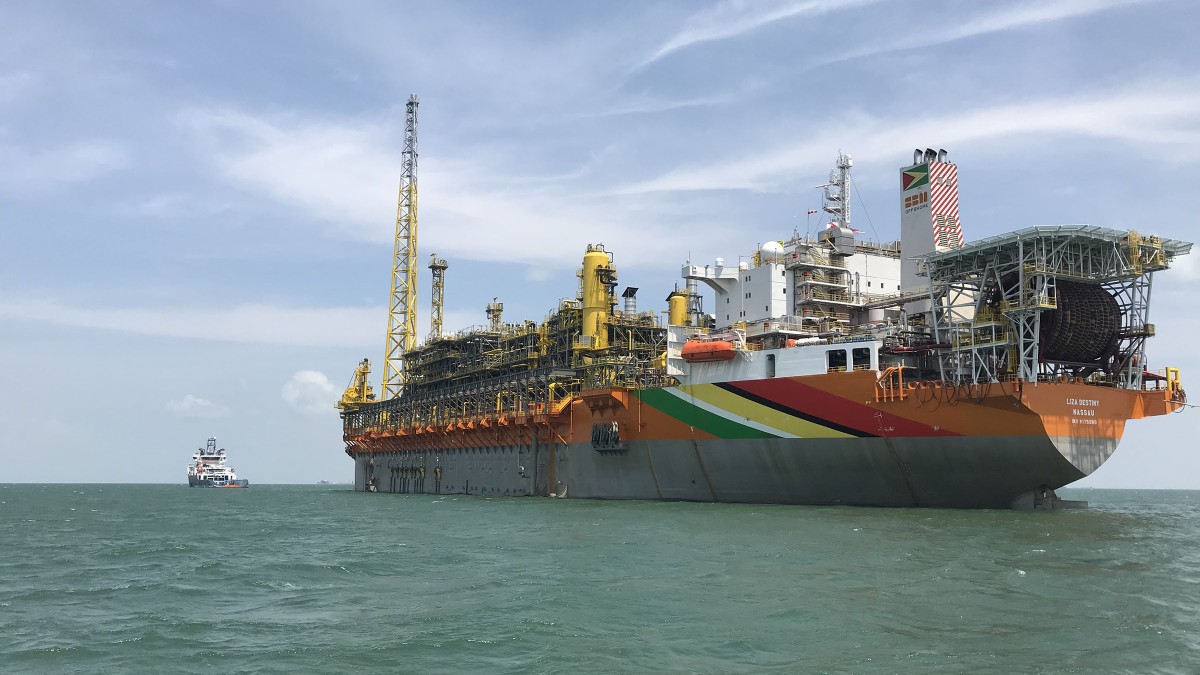
Exxon’s success offshore Guyana is encouraging oil majors to revisit high-risk frontier exploration, with companies seeking new production across South America, Africa and Asia, OilPrice.com reports. Exxon said this week that Guyana production had exceeded 1 million barrels, while an analyst cited in the report put output above 1 million barrels per day. Disruption to Middle Eastern supplies has increased the importance of those barrels.
A long-term investment delivers
Exxon and partners Hess Corp. and CNOOC invested billions in the offshore Stabroek Block, where successive discoveries have opened resources estimated at more than 11 billion barrels of crude. Citing the Financial Times, OilPrice.com traced Exxon’s commitment to its acquisition of the block in 1999. Active offshore exploration began in the late 2000s, followed by the partners’ first discovery in 2015.
That discovery coincided with the Paris Agreement, when expectations of a shift towards low-carbon energy were strengthening. OilPrice.com said growing pressure for green investment subsequently encouraged oil companies to prioritise shareholder returns over exploration and growth. Exxon continued investing and drilling in Guyana despite widespread forecasts that oil demand would soon peak, predictions the outlet said had yet to materialise.
Output rises rapidly
“It was the textbook definition of right place, right time. It became one of the crown jewels of ExxonMobil’s repositioning, demonstrating that the company could still deliver enormous resource additions and highly competitive barrels,” Rystad Energy analyst Schreiner Parker told the Financial Times.
“What is particularly remarkable is the speed of development: going from first oil in 2019 to more than 1mn barrels per day in just seven years, a feat seemingly only doable by ExxonMobil. Guyana has gone from an exploration success to one of the most important pillars of ExxonMobil’s global upstream growth strategy,” Parker also told the FT.
OilPrice.com said this year’s war involving the United States, Israel and Iran had caused major supply disruption, enhancing Guyana’s contribution to Exxon’s profits. European Union oil and gas imports declined only slightly during the disruption, while their value rose sharply because of higher prices, the outlet reported.
Exploration broadens geographically
Majors are again pursuing exploration rather than selling oil and gas assets to acquire solar and battery businesses, investments OilPrice.com said had disappointed expectations. Alongside neighbouring Suriname, companies are looking at established producers Brazil and Argentina, as well as opportunities in Africa and Asia. The report also identified renewed interest in Venezuela, which it attributed to what it described as a US takeover of the country’s oil industry and, consequently, much of its economy.