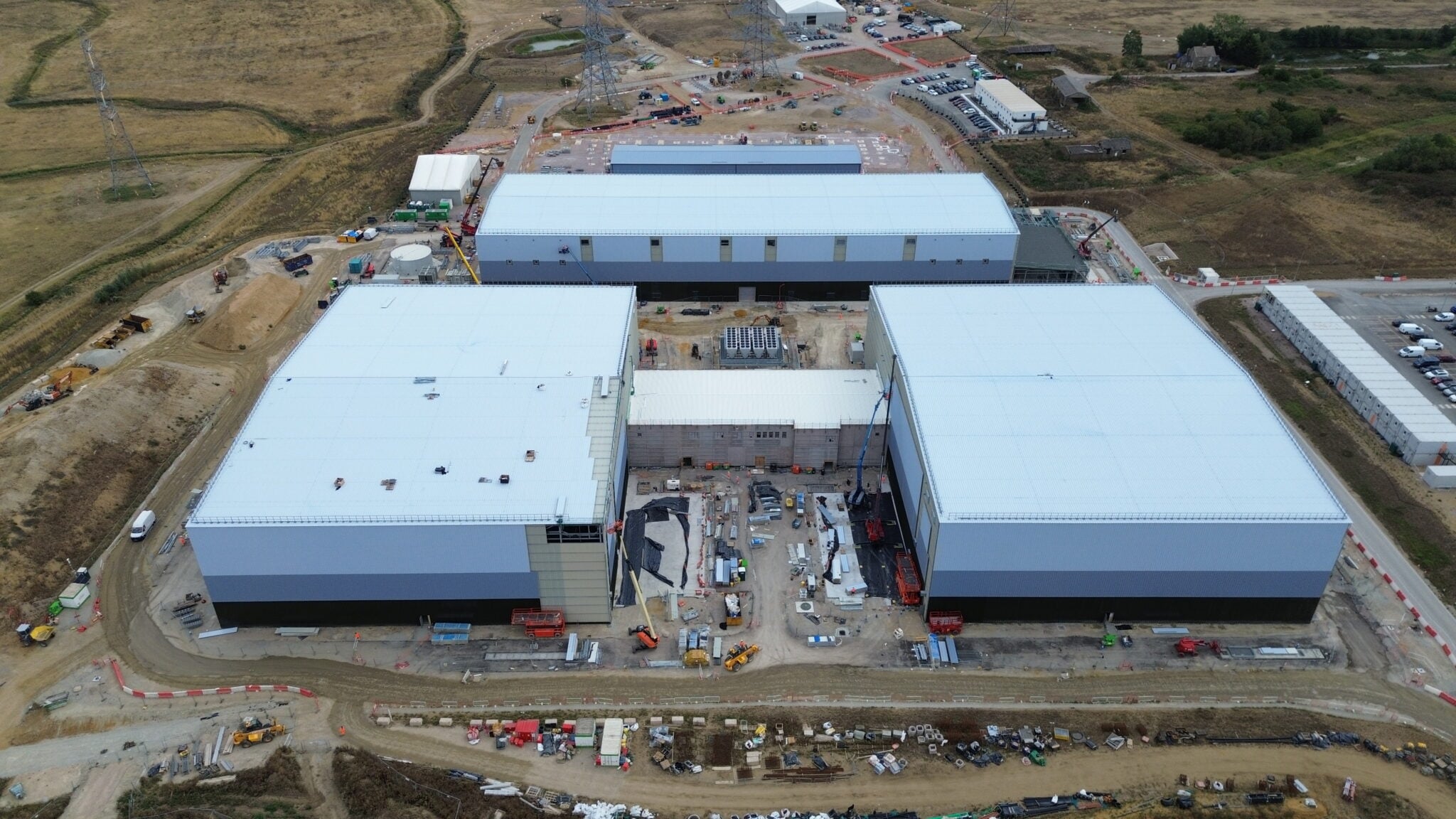
Fit-out work is under way at NeuConnect’s converter stations in Britain and Germany, advancing construction of what will be the first direct electricity transmission connection between the two countries, Offshore Energy reports. The high-voltage subsea cable project is expected to become operational by 2028, with stations at the Isle of Grain in Kent and Wilhelmshaven in northern Germany.
The converter halls, which measure 24 metres high and 70 metres wide, reached their full height earlier this year. That milestone enabled main contractor Siemens Energy to begin fitting out the buildings inside and outside, including the installation of essential mechanical and electrical systems. At the British station, transformers measuring seven metres long and five metres tall, and weighing more than 200 tonnes each, have been placed in position. Teams at both sites are now adding equipment and accessories to the transformers.
Inside the stations, work includes installing cable trays, ladders and ducting for heating, ventilation and air conditioning. Offshore Energy reported that exterior cladding was approaching completion in Britain, while installation continued in Germany. Other outdoor tasks include fitting gutters and drainage equipment and preparing roads for tarmac to provide access throughout the sites. At the German station’s AC switchyard, several lattice-style support towers have also been erected to carry overhead equipment.
NeuConnect chief executive Arnaud Grévoz described the installation of key systems as an important new stage for the project. He said offshore cable works were well beyond the halfway point and that construction remained on track, alongside progress at the onshore converter stations.
The project is led by investors Meridiam, Allianz, Kansai Electric Power and TEPCO. It is designed to carry 1.4 GW of electricity in either direction, a capacity described in the report as sufficient to supply 1.5 million homes. Construction at the Isle of Grain started in summer 2023, followed by the start of German construction in May 2024.